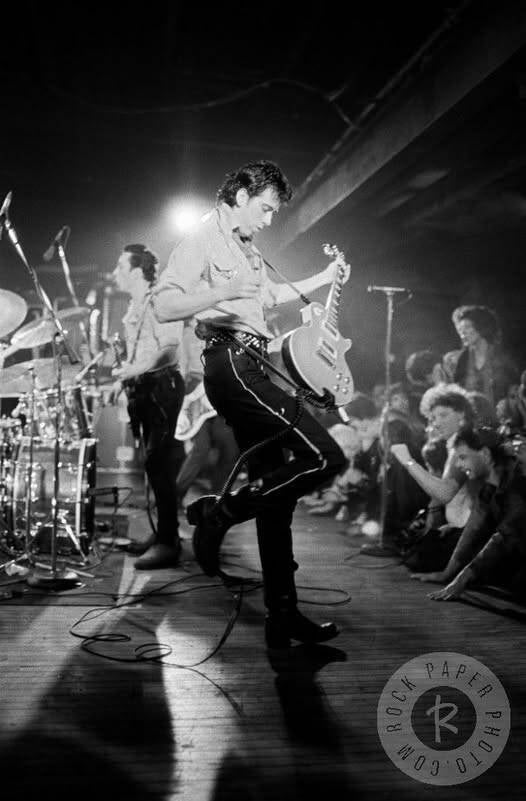
/Sounds/The Ruts — Jah War
2026/07/07Nouveau
Southall 1979 in deep dub — the Ruts' punk-reggae protest, à la Clash.

Des sons. Des mots. Des images. Ce qui résonne, ce qui percute, ce qui change tout / Sounds. Words. Images. What hits, what sticks, what blows your mind.
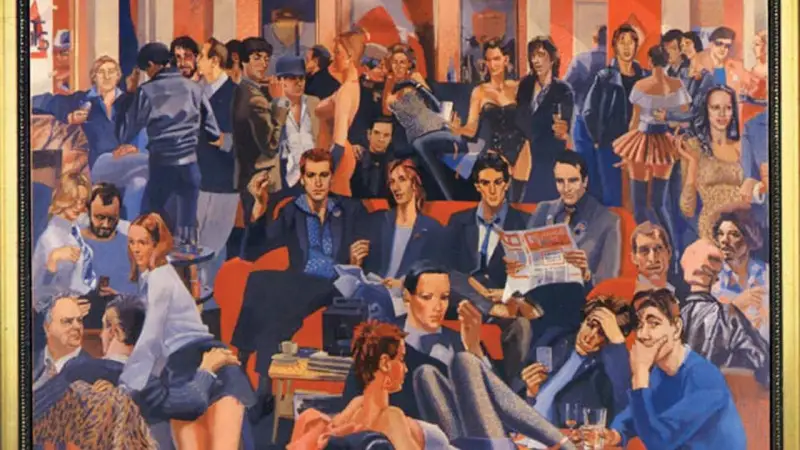
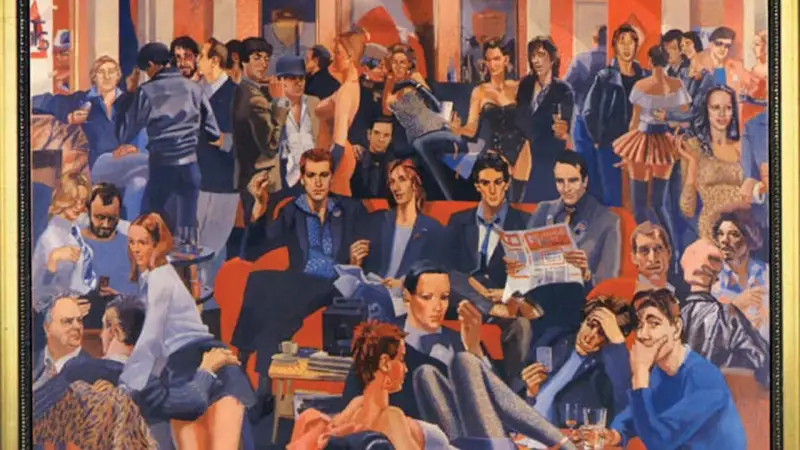
Southall, West London, 1977. Four kids raised on punk and the reggae sound systems next door. The Ruts didn't borrow reggae for colour — they lived beside it, releasing their first single on Misty in Roots' People Unite label. In June 1979, Babylon's Burning tore into the UK Top 10: a punk fireball, burning "with anxiety," as direct and explosive as the streets it described.
Their other face was Jah War — seven minutes of deep dub. It answered the Southall riots of April 1979, when the police's Special Patrol Group crushed an anti-fascist march: teacher Blair Peach clubbed to death, People Unite's HQ raided, Misty's manager left in a coma. Segs called releasing it "commercial suicide" — Radio 1 dropped it after a single play. Like the Clash, the Ruts knew reggae wasn't decoration: it was how you said what punk shouted too fast to land.
The year rock stopped asking for permission
2026/02/23
1977, c’est une année de bascule. En Grande-Bretagne, le chômage explose, la jeunesse ouvrière n’a plus rien à perdre et le vieux rock des stars commence à sonner faux — trop lisse, trop loin. Ce que le punk propose à la place est brutal et direct.
Les Clash placent en face B de leur premier single une déclaration sans appel : No Elvis, Beatles or the Rolling Stones. Pas de nostalgie. Pas de révérence. Juste l’urgence du présent — et l’idée que tout était à réécrire.

1977 is a turning point. In Britain, unemployment is rising fast, working-class youth has nothing left to lose, and the old rock of the superstars is starting to ring hollow — too polished, too distant. What punk offers instead is raw and direct.
The Clash put it on the B-side of their first single — a statement with no room for argument: No Elvis, Beatles or the Rolling Stones. No nostalgia. No reverence. Just the urgency of now — and the idea that everything was up for rewriting.
Blitzkrieg Bop - Two minutes. No future. Everything
2026/02/23
« Hey Ho ! Let’s go ! »
En quatre mots, tout est dit. En 1976, les Ramones ouvrent la voie du punk new-yorkais qui s’invente sur la petite scène du CBGB. Deux minutes de guitare en rafale, un riff martelé, une batterie droite comme un train lancé à pleine vitesse.
Le morceau est d’une simplicité radicale : quelques accords, un refrain-slogan, et une énergie brute qui deviendra la signature du punk.
Le célèbre « Hey! Ho! Let’s go! » a été imaginé comme un chant de foule, presque un cri de stade. Résultat : un des refrains les plus simples — et les plus contagieux — de l’histoire du rock.
__________________________________________________________________________________________________
"Hey Ho! Let's go!"
Four words, and everything's been said. In 1976, the Ramones blazed the trail for New York punk, forged on the tiny stage of CBGB. Two minutes of rapid-fire guitar, a hammered riff, a drumbeat as straight and unstoppable as a freight train at full speed.
The song is radically simple: a few chords, a slogan for a chorus, and a raw energy that would become the defining signature of punk.
The iconic "Hey! Ho! Let's Go!" was conceived as a crowd chant, almost like a stadium battle cry. The result? One of the simplest — and most infectious — choruses in the history of rock.
À la fin des années 1970, le CBGB est le laboratoire du rock new-yorkais. Ramones, Patti Smith, Television — le punk explose. Talking Heads, eux, jouent un autre jeu. Le groupe culte de Psycho Killer refuse les cases : plus cérébraux, plus funky, plus imprévisibles que tous leurs contemporains.
En 1983, Speaking in Tongues sort et avec lui, une anomalie : This Must Be the Place (Naive Melody). Deux accords. Une rythmique hypnotique. Presque rien — et pourtant tout.
Anecdote : en studio, les musiciens échangent leurs instruments. Tina Weymouth prend la guitare, Jerry Harrison la basse. C'est ce quiproquo musical qui crée ce groove naïf, bancal et irrésistible.
David Byrne, auteur de l'une des chansons d'amour les plus étranges — et les plus belles — du rock.
In the late 1970s, CBGB was ground zero for New York rock. The Ramones, Patti Smith, Television — punk was exploding. Talking Heads had a different plan. The band behind Psycho Killer refused every label: sharper, funkier, and stranger than anyone else on that scene.
In 1983, Speaking in Tongues dropped — and buried inside it, an oddity: This Must Be the Place (Naive Melody). Two chords. A hypnotic groove. Almost nothing — and somehow, everything.
The story behind it: in the studio, the band swapped instruments. Tina Weymouth picked up the guitar, Jerry Harrison the bass. That accidental shuffle created a groove so naive, so off-kilter — and so completely irresistible.
David Byrne, writing one of the strangest — and most beautiful — love songs in rock history.
1983. Speaking in Tongues. Et au milieu, une anomalie : This Must Be the Place (Naive Melody). Deux accords. Une rythmique hypnotique. Presque rien — et pourtant tout.
1983. Speaking in Tongues. Buried inside it, an anomaly: This Must Be the Place (Naive Melody). Two chords. A hypnotic groove. Almost nothing — and yet everything.
A filthy club on the Bowery where the toilets didn't work and history got made every night. Ramones, Patti Smith, Television, Blondie...
2026/03/01
When fiction becomes a setlist, the revolution is already late.
2026/03/08
Dans 1984, Syme travaille à réduire le langage jusqu’à ce que la pensée rebelle devienne impossible. Pas de censure — juste l’évaporation des mots. The Clash font le même constat avec Capital Radio : contrôler les ondes, c’est contrôler ce qu’on peut imaginer. Orwell supprime les mots. La BBC choisit les sons. Même combat.
In 1984, Syme works to shrink language until rebellious thought becomes impossible. No censorship — just the slow evaporation of words. The Clash made the same point with Capital Radio: control the airwaves, control what people can imagine. Orwell erases words. The BBC picks the sounds. Same fight.
Dans1984 de George Orwell, l’un des passages les plus marquants sur la manipulation du langage se déroule à la cantine du Ministère de la Vérité. Winston Smith y déjeune avec Syme, un collègue linguiste qui travaille à la rédaction de la onzième édition du dictionnaire de novlangue (Newspeak).
Comment va le dictionnaire ? demanda Winston en élevant la voix pour dominer le bruit.
– Lentement, répondit Syme. J’en suis aux adjectifs. C’est fascinant.
– Le visage de Syme s’était immédiatement éclairé au seul mot de dictionnaire. Il poussa de côté le récipient qui avait contenu le ragoût, prit d’une main délicate son quignon de pain, de l’autre son fromage et se pencha au-dessus de la table pour se faire entendre sans crier.
– La onzième édition est l’édition définitive, dit-il. Nous donnons au novlangue sa forme finale, celle qu’il aura quand personne ne parlera plus une autre langue. Quand nous aurons terminé, les gens comme vous devront le réapprendre entièrement.
Vous croyez, n’est-ce pas, que notre travail principal est d’inventer des mots nouveaux ? Pas du tout ! Nous détruisons chaque jour des mots, des vingtaines de mots, des centaines de mots. Nous taillons le langage jusqu’à l’os. La onzième édition ne renfermera pas un seul mot qui puisse vieillir avant l’année 2050.
Il mordit dans son pain avec appétit, avala deux bouchées, puis continua à parler avec une sorte de pédantisme passionné. Son mince visage brun s’était animé, ses yeux avaient perdu leur expression moqueuse et étaient devenus rêveurs.
– C’est une belle chose, la destruction des mots. Naturellement, c’est dans les verbes et les adjectifs qu’il y a le plus de déchets, mais il y a des centaines de noms dont on peut aussi se débarrasser. Pas seulement les synonymes, il y a aussi les antonymes. Après tout, quelle raison d’exister y a-t-il pour un mot qui n’est que le contraire d’un autre ? Les mots portent en eux-mêmes leur contraire. Prenez « bon », par exemple. Si vous avez un mot comme « bon » quelle nécessité y a-t-il à avoir un mot comme « mauvais » ? « Inbon » fera tout aussi bien, mieux même, parce qu’il est l’opposé exact de bon, ce que n’est pas l’autre mot. Et si l’on désire un mot plus fort que « bon », quel sens y a-t-il à avoir toute une chaîne de mots vagues et inutiles comme « excellent », « splendide » et tout le reste ? « Plusbon » englobe le sens de tous ces mots, et, si l’on veut un mot encore plus fort, il y a « double-plusbon ». Naturellement, nous employons déjà ces formes, mais dans la version définitive du novlangue, il n’y aura plus rien d’autre. En résumé, la notion complète du bon et du mauvais sera couverte par six mots seulement, en réalité un seul mot. Voyez-vous, Winston, l’originalité de cela ? Naturellement, ajouta-t-il après coup, l’idée vient de Big Brother.
Au nom de Big Brother, une sorte d’ardeur froide flotta sur le visage de Winston. Syme, néanmoins, perçut immédiatement un certain manque d’enthousiasme.
– Vous n’appréciez pas réellement le novlangue, Winston, dit-il presque tristement. Même quand vous écrivez, vous pensez en ancilangue. J’ai lu quelques-uns des articles que vous écrivez parfois dans le Times. Ils sont assez bons, mais ce sont des traductions. Au fond, vous auriez préféré rester fidèle à l’ancien langage, à son imprécision et ses nuances inutiles. Vous ne saisissez pas la beauté qu’il y a dans la destruction des mots. Savez-vous que le novlangue est la seule langue dont le vocabulaire diminue chaque année ?
Winston l’ignorait, naturellement. Il sourit avec sympathie, du moins il l’espérait, car il n’osait se risquer à parler.
Syme prit une autre bouchée de pain noir, la mâcha rapidement et continua :
– Ne voyez-vous pas que le véritable but du novlangue est de restreindre les limites de la pensée ? À la fin, nous rendrons littéralement impossible le crime par la pensée car il n’y aura plus de mots pour l’exprimer. Tous les concepts nécessaires seront exprimés chacun exactement par un seul mot dont le sens sera délimité. Toutes les significations subsidiaires seront supprimées et oubliées. Déjà, dans la onzième édition, nous ne sommes pas loin de ce résultat. Mais le processus continuera encore longtemps après que vous et moi nous serons morts. Chaque année, de moins en moins de mots, et le champ de la conscience de plus en plus restreint. Il n’y a plus, dès maintenant, c’est certain, d’excuse ou de raison au crime par la pensée. C’est simplement une question de discipline personnelle, de maîtrise de soi-même. Mais même cette discipline sera inutile en fin de compte. La Révolution sera complète quand le langage sera parfait. Le novlangue est l’angsoc et l’angsoc est le novlangue, ajouta-t-il avec une sorte de satisfaction mystique. Vous est-il jamais arrivé de penser, Winston, qu’en l’année 2050, au plus tard, il n’y aura pas un seul être humain vivant capable de comprendre une conversation comme celle que nous tenons maintenant ?
– Sauf..., commença Winston avec un accent dubitatif, mais il s’interrompit.
Il avait sur le bout de la langue les mots : « Sauf les prolétaires », mais il se maîtrisa. Il n’était pas absolument certain que cette remarque fût tout à fait orthodoxe. Syme, cependant, avait deviné ce qu’il allait dire.
– Les prolétaires ne sont pas des êtres humains, dit-il négligemment. Vers 2050, plus tôt probablement, toute connaissance de l’ancienne langue aura disparu. Toute la littérature du passé aura été détruite. Chaucer, Shakespeare, Milton, Byron n’existeront plus qu’en versions novlangue. Ils ne seront pas changés simplement en quelque chose de différent, ils seront changés en quelque chose qui sera le contraire de ce qu’ils étaient jusque-là. Même la littérature du Parti changera. Même les slogans changeront. Comment pourrait-il y avoir une devise comme « La liberté c’est l’esclavage » alors que le concept même de la liberté aura été aboli ? Le climat total de la pensée sera autre. En fait, il n’y aura pas de pensée telle que nous la comprenons maintenant. Orthodoxie signifie non-pensant, qui n’a pas besoin de pensée, l’orthodoxie, c’est l’inconscience.
« Un de ces jours, pensa soudain Winston avec une conviction certaine, Syme sera vaporisé. Il est trop intelligent. Il voit trop clairement et parle trop franchement. Le Parti n’aime pas ces individus-là. Un jour, il disparaîtra. C’est écrit sur son visage. »
In 1984 by George Orwell, one of the most striking passages on the manipulation of language takes place in the cafeteria of the Ministry of Truth. Winston Smith is having lunch with Syme, a linguist colleague working on the eleventh edition of the Newspeak dictionary.
How is the Dictionary getting on?' said Winston, raising his voice to overcome the noise.
'Slowly,' said Syme. 'I'm on the adjectives. It's fascinating.'
He had brightened up immediately at the mention of Newspeak. He pushed his pannikin aside, took up his hunk of bread in one delicate hand and his cheese in the other, and leaned across the table so as to be able to speak without shouting.
the Eleventh Edition is the definitive edition,' he said. 'We're getting the language into its final shape -- the shape it's going to have when nobody speaks anything else. When we've finished with it, people like you will have to learn it all over again. You think, I dare say, that our chief job is inventing new words. But not a bit of it! We're destroying words -- scores of them, hundreds of them, every day. We're cutting the language down to the bone. The Eleventh Edition won't contain a single word that will become obsolete before the year 2050.'
He bit hungrily into his bread and swallowed a couple of mouthfuls, then continued speaking, with a sort of pedant's passion. His thin dark face had become animated, his eyes had lost their mocking expression and grown almost dreamy.
'It's a beautiful thing, the destruction of words. Of course the great wastage is in the verbs and adjectives, but there are hundreds of nouns that can be got rid of as well. It isn't only the synonyms; there are also the antonyms. After all, what justification is there for a word which is simply the opposite of some other word? A word contains its opposite in itself. Take "good", for instance. If you have a word like "good", what need is there for a word like "bad"? "Ungood" will do just as well -- better, because it's an exact opposite, which the other is not. Or again, if you want a stronger version of "good", what sense is there in having a whole string of vague useless words like "excellent" and "splendid" and all the rest of them? "Plusgood" covers the meaning, or "doubleplusgood" if you want something stronger still. Of course we use those forms already. but in the final version of Newspeak there'll be nothing else. In the end the whole notion of goodness and badness will be covered by only six words -- in reality, only one word. Don't you see the beauty of that, Winston? It was B.B.'s idea originally, of course,' he added as an afterthought.
A sort of vapid eagerness flitted across Winston's face at the mention of Big Brother. Nevertheless Syme immediately detected a certain lack of enthusiasm.
'You haven't a real appreciation of Newspeak, Winston,' he said almost sadly. 'Even when you write it you're still thinking in Oldspeak. I've read some of those pieces that you write in The Times occasionally. They're good enough, but they're translations. In your heart you'd prefer to stick to Oldspeak, with all its vagueness and its useless shades of meaning. You don't grasp the beauty of the destruction of words. Do you know that Newspeak is the only language in the world whose vocabulary gets smaller every year?'
Winston did know that, of course. He smiled, sympathetically he hoped, not trusting himself to speak. Syme bit off another fragment of the dark-coloured bread, chewed it briefly, and went on:
'Don't you see that the whole aim of Newspeak is to narrow the range of thought? In the end we shall make thoughtcrime literally impossible, because there will be no words in which to express it. Every concept that can ever be needed, will be expressed by exactly one word, with its meaning rigidly defined and all its subsidiary meanings rubbed out and forgotten. Already, in the Eleventh Edition, we're not far from that point. But the process will still be continuing long after you and I are dead. Every year fewer and fewer words, and the range of consciousness always a little smaller. Even now, of course, there's no reason or excuse for committing thoughtcrime. It's merely a question of self-discipline, reality-control. But in the end there won't be any need even for that. The Revolution will be complete when the language is perfect. Newspeak is Ingsoc and Ingsoc is Newspeak,' he added with a sort of mystical satisfaction. 'Has it ever occurred to you, Winston, that by the year 2050, at the very latest, not a single human being will be alive who could understand such a conversation as we are having now?'
'Except-' began Winston doubtfully, and he stopped.
It had been on the tip of his tongue to say 'Except the proles,' but he checked himself, not feeling fully certain that this remark was not in some way unorthodox. Syme, however, had divined what he was about to say.
'The proles are not human beings,' he said carelessly. 'By 2050 earlier, probably -- all real knowledge of Oldspeak will have disappeared. The whole literature of the past will have been destroyed. Chaucer, Shakespeare, Milton, Byron -- they'll exist only in Newspeak versions, not merely changed into something different, but actually changed into something contradictory of what they used to be. Even the literature of the Party will change. Even the slogans will change. How could you have a slogan like "freedom is slavery" when the concept of freedom has been abolished? The whole climate of thought will be different. In fact there will be no thought, as we understand it now. Orthodoxy means not thinking -- not needing to think. Orthodoxy is unconsciousness.'
One of these days, thought Winston with sudden deep conviction, Syme will be vaporized. He is too intelligent. He sees too clearly and speaks too plainly. The Party does not like such people. One day he will disappear. It is written in his face.
Same urgency. Different riddim
2026/03/22

The Clash transforment Police and Thieves de Junior Murvin en un mur de guitares de six minutes. La version originale est douce, spectrale. Celle des Clash est une déclaration de guerre. Premier grand mariage punk-reggae — une brèche que personne ne refermera.
The Clash turned Junior Murvin’s Police and Thieves into a six-minute guitar wall. The original is soft, spectral. The Clash version is a declaration of war. The first great punk-reggae marriage — a door no one would ever close again.
Stiff Little Fingers reprennent Johnny Was de Bob Marley. Depuis Belfast en guerre, le texte prend une dimension différente. Ce n’est plus une parabole — c’est un témoignage. Jake Burns chante sans filet, sans distance.
Stiff Little Fingers cover Bob Marley’s Johnny Was. From war-torn Belfast, the words land differently. It’s no longer a parable — it’s testimony. Jake Burns sings without distance, without armor.

A bad review. A perfect song - A manifesto
2026/04/05
Garageland est la piste finale du premier album des Clash. Une chanson rapide, brute, presque un manifeste punk. Joe Strummer y célèbre les groupes amateurs, les musiciens sans moyens et la liberté de faire du bruit sans permission.
La chanson est une réponse directe à une critique publiée dans le NME par le journaliste Charles Shaar Murray. Après un concert des Clash en 1977, il écrit que le groupe devrait être “confined to garageland” — autrement dit rester dans les garages plutôt que sur scène.
Garageland is the closing track of The Clash’s first album. A fast, raw song — almost a punk manifesto. Joe Strummer celebrates amateur bands, musicians with no money and the freedom to make noise without permission.
The song is a direct response to a review published in NME by journalist Charles Shaar Murray. After a Clash gig in 1977, he wrote that the band should be “confined to garageland” — meaning they should stay in garages rather than perform on stage.
A Graphic Dictatorship - No mercy
2026/04/26
Paris, 1977. Pendant que Londres crache sur la reine, cinq étudiants des Beaux-Arts sortent leurs crayons. Kiki Picasso, Loulou Picasso, Olivia Clavel, Lulu Larsen, Bananar. Ils appellent ça la « dictature graphique ».
Leur arme : le collage. Images d'agence, pubs, BD — tout passe à la moulinette. Pas de ligne politique. Juste l'envie féroce de foutre la merde. Pendant que le punk anglais criait no future, eux dessinaient à quoi ça ressemblait. Sans guitare, sans ampli. Juste du papier, des ciseaux, et une lucidité qui coupe.
Bazooka n'était pas un groupe. C'était un engin explosif improvisé.
Paris, 1977. While London spits on the queen, five art students pull out their pencils. Kiki Picasso, Loulou Picasso, Olivia Clavel, Lulu Larsen, Bananar. They call it the "graphic dictatorship."
Their weapon: collage. Wire photos, ads, comics — everything goes through the grinder. No political line. Just a ferocious urge to stir up trouble. While English punk screamed no future, they drew what it looked like. No guitar, no amp. Just paper, scissors, and a lucidity that cuts.
Bazooka wasn't a band. It was an improvised explosive device.
The album that set the rules — then broke them.
2026/05/03

Quatorze titres. Trois semaines d’enregistrement. 4 000 livres de budget. La pochette : photo de rue en noir et blanc, nom du groupe tagué à la main — vert fluo sur fond sombre. Pas de photoshoot. Pas de concept.
London’s Burning à 100 à l’heure. White Riot — deux minutes de panique contrôlée. Police & Thieves — reggae de Junior Murvin en plein milieu du disque, personne ne cille. Garageland en final — un manifeste.
Fourteen tracks. Three weeks of recording. £4,000 budget. The sleeve: black and white street photo, band name hand-tagged — fluorescent green on dark. No photoshoot. No concept.
London’s Burning at 100 mph. White Riot — two minutes of controlled panic. Police & Thieves — Junior Murvin reggae in the middle of a punk record, nobody flinches. Garageland to close — a manifesto.

On l’aura compris. The Clash est mon groupe préféré — et ce premier album aussi. Joe Strummer, Mick Jones, Paul Simonon. Un look de bande de gamins qui auraient volé des instruments et trouvé quelque chose à dire.
You’ve figured that out. The Clash is my favourite band — and this first album too. Joe Strummer, Mick Jones, Paul Simonon. A look of kids who stole instruments and found something to say.
2 burning souls
2026/05/07
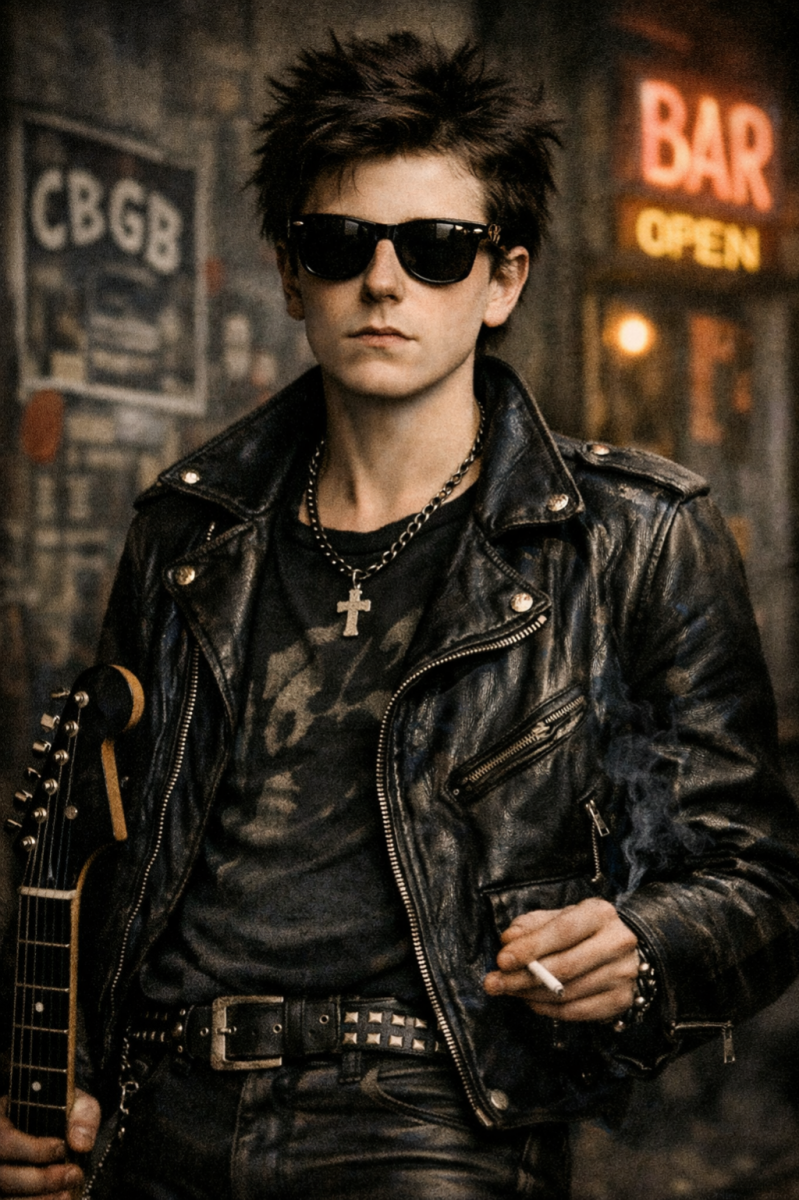
Rimbaud écrit Sensation à seulement 15 ans : une marche d’été, la nature, les sensations, et une immense envie de liberté. Cette énergie brute a fasciné le rock. Patti Smith, qui gardait sa photo sur elle dans les années 70, voyait en lui un véritable poète punk : jeune, rebelle et libre.
Mars 1870 - Arthur Rimbaud, Poésies
Par les soirs bleus d’été, j’irai dans les sentiers,
Picoté par les blés, fouler l’herbe menue :
Rêveur, j’en sentirai la fraîcheur à mes pieds.
Je laisserai le vent baigner ma tête nue.
Je ne parlerai pas, je ne penserai rien :
Mais l’amour infini me montera dans l’âme,
Et j’irai loin, bien loin, comme un bohémien,
Par la Nature, – heureux comme avec une femme.
In the blue summer evenings, I will go along the paths,
And walk over the short grass, as I am pricked by the wheat:
Daydreaming I will feel the coolness on my feet.
I will let the wind bathe my bare head.
I will not speak, I will have no thoughts:
But infinite love will mount in my soul;
And I will go far, far off, like a gypsy,
Through the country side-joyous as if I were with a woman.
Arthur Rimbaud wrote Sensation at just 15: a summer walk filled with nature, raw feelings, and a huge desire for freedom. That wild energy inspired generations of rock artists. Patti Smith, who carried his photo with her in the 1970s, saw him as the ultimate punk poet: young, rebellious, and completely free.
Or how a small south-west France town beat London without even trying
2026/05/11
Mont-de-Marsan. Sud-Ouest de la France. Août 1976. Personne n'avait vu venir ça.
Skydog Records — label rock indépendant — choisit les arènes du Plumaçon pour le premier festival punk d'Europe. Un mois avant le 100 Club de Londres. Le préfet désapprouve. Le maire aussi. Les 1 500 curieux qui débarquent s'en foutent poliment. Zéro incident. Ce qui, à bien y réfléchir, est peut-être la chose la plus punk de toute cette histoire.
1977 confirme que ce n'était pas un accident. 4 000 personnes venues de Londres, Madrid, Genève et du fin fond des Landes. The Clash en tête d'affiche — premier album tout juste sorti chez CBS. The Damned. The Police. Dans des arènes qui sentent encore la tauromachie.
Le punk avait choisi ses capitales — New York, Londres. Il avait oublié de prévenir Mont-de-Marsan.
Famous sports journalist at Antenne 2, perfectly equipped for the occasion — arrives microphone in hand, dispatched to hostile territory. What follows is wildlife documentary, not music journalism: safety pins, outfits, astonishment. The music? Barely mentioned. French TV and rock'n'roll — a love story that never quite got off the ground.
Mont-de-Marsan. Southwest France. August 1976. Nobody saw it coming.
Skydog Records — independent rock label — chose the Plumaçon arena for Europe's first punk festival. One month before London's 100 Club. The prefect disapproved. So did the mayor. The 1,500 curious souls who showed up politely didn't care. Zero incidents. Which, when you think about it, might be the most punk thing about the whole story.
1977 confirmed it was no accident. 4,000 people in from London, Madrid, Geneva, and the depths of the Landes. The Clash headlining — debut album just out on CBS. The Damned. The Police. In an arena that still smelled of bullfighting.
Punk had chosen its capitals — New York, London. It had forgotten to tell Mont-de-Marsan.
From the beginnings up to Exile on Main St., the Rolling Stones are one of rock's most beautiful stories. (I Can't Get No) Satisfaction in 1965: a riff scribbled by Keith Richards in the middle of the night on a tape recorder, and the rest is history.
But through the seventies, the Stones become an institution. Some Girls in 1978 shows them shaking themselves awake in response to punk — but the rebellion is starting to look calculated.
Les Rolling Stones, des débuts jusqu'à Exile on Main St., c'est l'une des plus belles histoires du rock. (I Can't Get No) Satisfaction en 1965 : un riff griffonné par Keith Richards au milieu de la nuit sur un magnétophone, et le reste appartient à l'histoire.
Mais dans les années 70, les Stones deviennent une institution. Some Girls en 1978 les voit se secouer face au punk — mais la rébellion commence à sentir le calcul.
Punk responds. The Clash cut to the bone: "No Elvis, Beatles or the Rolling Stones." Clean slate. Generation X take the opposite stance — Billy Idol owns his love for the Stones: "we were honest about what we liked." In France, Starshooter renames Get Back as Get Bacque. Reverence blown apart.
Le punk répond. Les Clash tranchent : "No Elvis, Beatles or the Rolling Stones." Table rase. Generation X prennent le contre-pied — Billy Idol assume son amour des Stones : "we were honest about what we liked." En France, Starshooter rebaptise Get Back en Get Bacque. Révérence dynamitée.
And then there's Devo. Five guys from Akron, Ohio, in yellow chemist coveralls, red flowerpot hats, diving goggles and transparent face masks — full hazmat gear, as if they'd come to inspect a contaminated zone. Which, in a way, is exactly what they're doing. The rock scene of 1978, to them, is a biohazard area. You don't go in without protection.
Et puis il y a Devo. Cinq types d'Akron, Ohio, en combinaisons de chimiste jaune, chapeaux rouges en forme de bac à sable inversé, lunettes de plongée et masques transparents — équipement de protection NBC complet, comme s'ils venaient inspecter une zone contaminée. Ce qui, d'une certaine façon, est exactement ce qu'ils font. La scène rock de 1978, pour eux, c'est une zone à risque biologique. On n'y entre pas sans équipement.

Devo — Photo promo Warner Bros., 1978
These guys cover Satisfaction by stripping out everything that defines it. Richards' riff? Gone. Replaced by staccato strings, a jerky beat, a robotic voice. It isn't a parody — it's an autopsy. The frustration of 1965, replayed in cold, mechanical, post-industrial mode.
Ces types reprennent Satisfaction en la vidant de ce qui la définit. Le riff de Richards ? Supprimé. Remplacé par des cordes en staccato, un beat saccadé, une voix robotique. Ce n'est pas une parodie : c'est une autopsie. La frustration de 1965, rejouée en mode mécanique, froid, post-industriel.
Devo — (I Can't Get No) Satisfaction · Clip officiel HD, 1978
Warner Bros. demanded Mick Jagger's approval before releasing the record. In March 1978, the five Ohio "spud boys" set a boombox down in front of the biggest rock star in the world and pressed Play. Jagger stood up and started dancing. "I like it! I like it!" The total deconstruction of his own song, blessed by the original himself.
Warner Bros. exige l'accord de Mick Jagger avant de sortir le disque. En mars 1978, les cinq "spud boys" d'Ohio posent un ghetto-blaster devant la plus grande rock star du monde et appuient sur Play. Jagger se lève et commence à danser. "I like it! I like it!" La déconstruction totale de sa propre chanson, bénie par l'original lui-même.
Iggy Pop had already asked the question a few years earlier, in his own way: "No fun." Devo, in 1978, rephrase it: no more satisfaction either.
Iggy Pop avait déjà posé la question quelques années plus tôt, à sa façon : "No fun." Devo, en 1978, reformulent : plus de satisfaction non plus.
Avant le punk, il y avait le pub rock. Pas un mouvement, plutôt un climat — une scène de pubs londoniens entre 1972 et 1976 où des groupes joués en sueur dans des arrière-salles à 50 personnes décidaient qu'ils en avaient marre du prog rock pompeux, du glam à paillettes, et des solos de 12 minutes. Ils voulaient revenir au rock'n'roll de base : R&B, rockabilly, soul, blues électrique. Dr Feelgood, Brinsley Schwarz, Ducks Deluxe, Kilburn and the High Roads. C'est là, dans cette boue chaude et bruyante, que le punk allait pousser comme un champignon.
Before punk, there was pub rock. Not a movement, more a climate — a London pub circuit between 1972 and 1976 where bands sweated through back rooms of fifty-odd punters and decided they'd had enough of pompous prog, glittery glam, and twelve-minute solos. They wanted to get back to basic rock'n'roll: R&B, rockabilly, soul, electric blues. Dr Feelgood, Brinsley Schwarz, Ducks Deluxe, Kilburn and the High Roads. It's in this hot, noisy mud that punk would grow like a mushroom.
Trois groupes, trois trajectoires distinctes — mais qui se croisent en permanence dans les mêmes salles, les mêmes squats, les mêmes nuits.
Three bands, three distinct trajectories — constantly crossing paths in the same venues, the same squats, the same nights.
Southend-on-Sea, 1975. Quatre gamins de l'estuaire de la Tamise — Barrie Masters (chant), Dave Higgs (guitare), Paul Gray (basse), Steve Nicol (batterie) — décident de jouer du rock'n'roll comme s'ils avaient un train à prendre. Pas de chichis, pas de poses : du R&B accéléré, des covers nerveuses (The Who, Sam Cooke, Bob Seger), une rage froide.
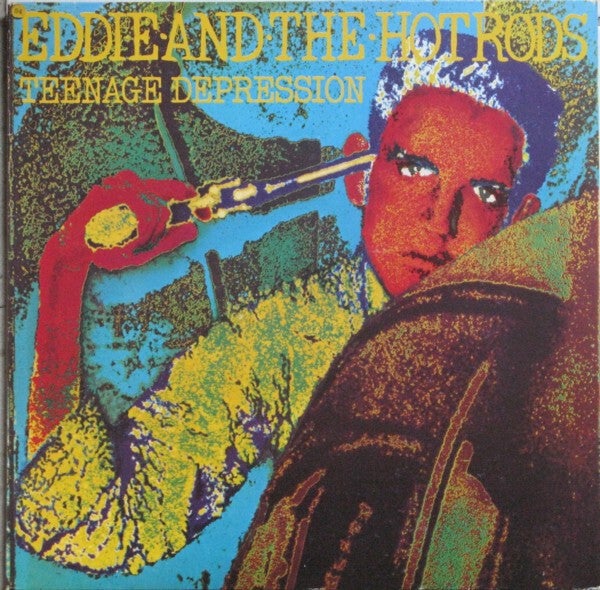
Octobre 1976 : Teenage Depression sort sur Island Records. Pochette en or noir — une silhouette qui se tire un revolver dans la tempe. L'image punk avant le punk. L'album monte à la 43e place des charts britanniques, le morceau-titre à la 35e des singles. Wikipédia, des décennies plus tard, les qualifiera de « missing link entre pub rock et punk rock ». Ils ne l'auront pas volé.
Et ce n'est pas un hasard si les Hot Rods et les 101'ers partageaient une résidence sur la même scène londonienne. Strummer lui-même, des années plus tard, dira de son ex-groupe : « Je sais qu'on était bons. Pour le son et l'excitation, on était bien meilleurs qu'Eddie and the Hot Rods. » Une demi-pique, une demi-révérence. Les Hot Rods étaient l'étalon.
Southend-on-Sea, 1975. Four kids from the Thames estuary — Barrie Masters (vocals), Dave Higgs (guitar), Paul Gray (bass), Steve Nicol (drums) — decide to play rock'n'roll as if they had a train to catch. No fuss, no poses: turbo-charged R&B, nervy covers (The Who, Sam Cooke, Bob Seger), a cold rage.
October 1976: Teenage Depression drops on Island Records. The sleeve is iron-black gold — a silhouette putting a revolver to his temple. Punk imagery before punk. The album hits no. 43 on the UK charts, the title track no. 35 on singles. Decades later, Wikipedia would call them "the missing link between pub rock and punk rock". They earned that.
And it's no coincidence the Hot Rods shared a residency on the same London circuit as the 101'ers. Strummer himself, years later, said of his ex-band: "I know we were good. For sound and excitement, we were much better than Eddie and the Hot Rods." Half a jab, half a bow. The Hot Rods were the yardstick.
Mai 1974, Maida Vale. Dans un squat au 101 Walterton Road, un certain John Graham Mellor — pas encore Joe Strummer — monte un groupe avec Clive Timperley (guitare), Dan Kelleher (basse) et Richard Dudanski (batterie). Ils prennent le nom du squat. Ou de la salle 101 d'1984 d'Orwell. Personne ne sait vraiment. Les deux versions sonnent juste.
Pendant deux ans, les 101'ers tournent les pubs : Bonie Maronie, Heartbreak Hotel, Route 66, Gloria. Du rockabilly, du R&B, des compositions originales (Keys to Your Heart, Letsagetabitarockin'). Ils écument le circuit, partagent l'affiche avec Lee Brilleaux de Dr Feelgood, croisent les Hot Rods.
Puis vient le 3 avril 1976, aux Nashville Rooms. Première partie de la soirée : un groupe inconnu appelé les Sex Pistols. Strummer est au bar avec Brilleaux. Cinq secondes après le début du premier morceau, il sait. « On était comme du papier d'hier. On était finis. » Quelques semaines plus tard, fin mai 76, les 101'ers se séparent. Strummer rejoint Mick Jones, Paul Simonon et un certain Terry Chimes. Le groupe s'appellera The Clash. Premier concert : 4 juillet 1976, Sheffield, en première partie des Pistols. La boucle est bouclée en trois mois.
Keys to Your Heart, l'unique single des 101'ers, sort en juin 76 sur Chiswick Records. Le groupe n'existe déjà plus.
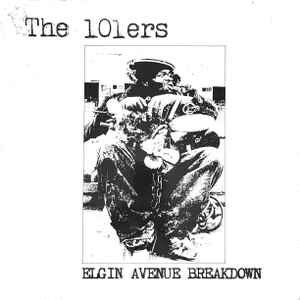
May 1974, Maida Vale. In a squat at 101 Walterton Road, one John Graham Mellor — not yet Joe Strummer — forms a band with Clive Timperley (guitar), Dan Kelleher (bass), Richard Dudanski (drums). They take their name from the squat. Or from Room 101 in Orwell's 1984. Nobody really knows. Both versions ring true.
For two years, the 101'ers work the pubs: Bonie Maronie, Heartbreak Hotel, Route 66, Gloria. Rockabilly, R&B, a handful of originals (Keys to Your Heart, Letsagetabitarockin'). They scour the circuit, share bills with Dr Feelgood's Lee Brilleaux, cross paths with the Hot Rods.
Then comes 3 April 1976, at the Nashville Rooms. Opening act: an unknown band called the Sex Pistols. Strummer is at the bar with Brilleaux. Five seconds into the first song, he knows. "We were like yesterday's paper. We were over." Weeks later, by the end of May '76, the 101'ers split. Strummer joins Mick Jones, Paul Simonon and one Terry Chimes. The new band will be called The Clash. First gig: 4 July 1976, Sheffield, opening for the Pistols. The loop closes in three months.
Keys to Your Heart, the 101'ers' only single, comes out in June '76 on Chiswick Records. The band no longer exists.
Ian Dury n'est pas un punk. C'est l'inverse du punk : 35 ans, prof aux Beaux-Arts (Royal College of Art, où il a eu Peter Blake comme professeur), polio depuis ses 7 ans, jambe atrophiée, démarche de travers, gouaille cockney, érudition. La mort de son idole Gene Vincent en 1971 le pousse à former son premier groupe : Kilburn and the High Roads, fixture du circuit pub rock 1971-1975. Première partie des Who, presse élogieuse, mais le succès commercial leur échappe.
1977. Dury rencontre Chaz Jankel, claviériste génial. Ils s'enferment dans l'appartement de Dury à Oval Mansions — surnommé par lui-même « Catshit Mansions ». Dury présente à Jankel des piles de paroles tapées à la machine. Sex & Drugs & Rock & Roll, Jankel refuse trois fois — il trouve le titre cliché — avant de céder.
Le single sort le 26 août 1977 sur Stiff Records. La BBC l'interdit. 19 000 exemplaires vendus. Aucun classement. Et pourtant. L'expression entrera dans le langage courant, dans toutes les langues, comme la définition même de l'excès rock — alors que Dury, lui, a toujours dit que sa chanson parlait du contraire : « suggérer qu'il y a autre chose dans la vie que l'existence métro-boulot-dodo ».
Le riff de la basse, signé Norman Watt-Roy ? Pompé à Charlie Haden sur un album d'Ornette Coleman de 1959. Que Haden avait lui-même pompé à un vieil air folk cajun. Tout est volé, rien n'est perdu. Suivront New Boots and Panties!! (sept. 1977, certifié platine), puis Hit Me with Your Rhythm Stick n°1 UK en 1978. Mickey Gallagher des Blockheads finira par jouer aussi avec The Clash. La boucle, encore.
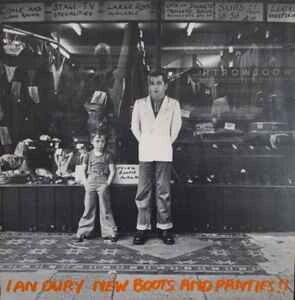
Ian Dury isn't a punk. He's the opposite of punk: 35 years old, art school lecturer (Royal College of Art, taught by Peter Blake), polio survivor since the age of 7, withered leg, sideways walk, cockney swagger, sharp mind. The death of his idol Gene Vincent in 1971 pushes him to form his first band: Kilburn and the High Roads, fixture of the 1971-1975 pub rock circuit. Supported The Who, glowing press — but commercial success eluded them.
1977. Dury meets Chaz Jankel, a brilliant keyboardist. They lock themselves in Dury's flat at Oval Mansions — which he himself nicknamed "Catshit Mansions". Dury hands Jankel piles of typed lyrics. Sex & Drugs & Rock & Roll, Jankel turns down three times — finds the title clichéd — before giving in.
The single drops on 26 August 1977 on Stiff Records. The BBC bans it. 19,000 copies sold. No chart entry. And yet. The phrase will enter common language, in every tongue, as the very definition of rock excess — while Dury himself always said his song was about the opposite: "suggesting there's more to life than a 9-to-5 existence."
The bass riff, played by Norman Watt-Roy? Lifted from Charlie Haden on a 1959 Ornette Coleman record. Which Haden himself had lifted from an old Cajun folk tune. Everything's stolen, nothing's lost. Then come New Boots and Panties!! (Sept. 1977, certified Platinum), then Hit Me with Your Rhythm Stick, no. 1 UK in 1978. Mickey Gallagher of the Blockheads will end up playing with The Clash too. The loop, once again.
Trois groupes, trois destins, une même scène. Eddie and the Hot Rods n'ont jamais vraiment basculé dans le punk — ils ont tourné avec les Ramones et les Talking Heads en 1977, puis se sont dilués dans les années 80. Les 101'ers ont disparu en six mois pour donner naissance à The Clash. Ian Dury a inventé sa propre langue : ni punk ni pub rock, juste lui. Il est mort en 2000, à 57 ans, d'un cancer.
Three bands, three fates, one scene. Eddie and the Hot Rods never quite tipped into punk — they toured with the Ramones and Talking Heads in 1977, then dissolved through the 80s. The 101'ers vanished in six months to give birth to The Clash. Ian Dury invented his own language: neither punk nor pub rock, just himself. He died in 2000, aged 57, from cancer.
Le pub rock n'a pas survécu à ce qu'il a engendré. C'est sans doute son plus beau succès.
Pub rock didn't survive what it spawned. That's probably its greatest success.
"I Fought the Law" was never a Clash song. It was stolen — and made immortal. Sonny Curtis wrote it in 1958, in fifteen minutes, as a country tune. The Crickets — Buddy Holly's band — cut it in 1959. Nobody listened.
Then Bobby Fuller turned it into a hit in 1965: clean guitar, killer chorus. He was dead a year later, aged 23, in circumstances never explained. In 1978, Strummer and Jones were in San Francisco polishing Give 'Em Enough Rope. At the Automatt studio, a jukebox. Bobby Fuller's version played. By the time they were back in London, they could play it.
« I Fought the Law » n'est pas une chanson des Clash. C'est une chanson volée — et rendue immortelle. Sonny Curtis l'écrit en 1958, en quinze minutes, comme un morceau country. Les Crickets — le groupe de Buddy Holly — l'enregistrent en 1959. Personne ne l'écoute.
Puis Bobby Fuller en fait un tube en 1965 : guitare claire, refrain imparable. Il meurt l'année suivante, à 23 ans, asphyxié dans une voiture — circonstances jamais éclaircies. En 1978, Strummer et Jones sont à San Francisco pour peaufiner Give 'Em Enough Rope. Au studio Automatt, un juke-box. La version de Bobby Fuller tourne. De retour à Londres, ils la jouent déjà.
May 1979: the cover lands on the EP The Cost of Living. Faster, leaner, that riff for an intro. Strummer swaps "left" for "killed." The country song became a threat — and cracked American radio open for The Clash. "I wrote it as a country song," Curtis shrugged. He never imagined where it would end up.
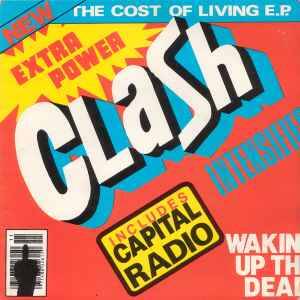 The Cost of Living EP — CBS, mai 1979
Mai 1979 : la reprise sort sur l'EP The Cost of Living. Plus rapide, plus sèche, ce riff en guise d'intro. Strummer glisse « killed » là où Fuller chantait « left ». La country est devenue une menace — et ouvre enfin les radios américaines aux Clash. « Je l'ai écrite comme une chanson country », dira Curtis. Il n'a jamais imaginé où elle finirait.
4 juillet 2026— Sons
Poly Styrene and the day-glo scream that shook 1977.
2026/07/04
X-Ray Spex · Oh Bondage! Up Yours! (Twndish, 1978)
FR
1977. Une gamine aux bagues dentaires et au maquillage fluo empoigne le micro. Poly Styrene ne chante pas : elle sonne l'alarme contre la société de consommation. Derrière, le saxo déraillé de Lora Logic. Un cri devenu manifeste.
EN
1977. A brace-toothed kid in day-glo make-up grabs the mic. Poly Styrene doesn't sing — she sounds the alarm against consumer society. Behind her, Lora Logic's derailed sax. A scream turned manifesto.
4 juillet 2026— Sons
Derry's teenage dream, and John Peel's favourite record.
2026/07/04
FR
1978. Quatre gamins de Derry en pulls tricotés par leur mère, pas une once de mode. The Undertones n'ont pas la rage : ils ont l'urgence tendre de l'adolescence. John Peel passe le disque deux fois de suite, en pleure. Sur sa tombe, une phrase de la chanson.
EN
1978. Four kids from Derry in their mums' knitted jumpers, not a scrap of fashion. The Undertones don't do rage — they do the tender urgency of being young. John Peel spins it twice in a row, in tears. A line from it is carved on his grave.
The Undertones · Teenage Kicks (1978)
4 juillet 2026— Sons
Strummer's reggae night, and The Clash's finest reckoning.
2026/07/04
FR
Juin 1977. Strummer file à une nuit reggae au Palais d'Hammersmith. Il espère du roots rebelle, il trouve du show-business. De cette déception naît une chanson-bilan : le punk, déjà, a un prix.
The Clash · Live, Glasgow Apollo, 4 juillet 1978 (Rude Boy)
EN
June 1977. Strummer heads to an all-night reggae session at the Hammersmith Palais. He hopes for rebel roots; he finds showbiz. Out of that letdown comes a reckoning of a song: punk already had a price tag.
Southall, West London, 1977. Four kids raised on punk and the reggae sound systems next door. The Ruts didn't borrow reggae for colour — they lived beside it, releasing their first single on Misty in Roots' People Unite label. In June 1979, Babylon's Burning tore into the UK Top 10: a punk fireball, burning "with anxiety," as direct and explosive as the streets it described.
Southall, ouest de Londres, 1977. Quatre gamins nourris au punk et aux sound systems reggae d'à côté. Les Ruts n'empruntent pas le reggae pour la déco — ils vivent avec, et sortent leur premier single sur le label People Unite de Misty in Roots. En juin 1979, Babylon's Burning explose dans le Top 10 britannique : une boule de feu punk, qui brûle « with anxiety », aussi frontale que la rue qu'elle décrit.
But their other face was Jah War — seven minutes of deep dub. It answered the Southall riots of April 1979, when the police's Special Patrol Group crushed an anti-fascist march: teacher Blair Peach clubbed to death, People Unite's HQ raided, Misty's manager left in a coma. Segs called releasing it "commercial suicide" — Radio 1 dropped it after a single play. Like the Clash, the Ruts knew reggae wasn't decoration: it was how you said what punk shouted too fast to land.
Mais leur autre visage, c'est Jah War — sept minutes de dub profond. Le morceau répond aux émeutes de Southall d'avril 1979, quand le Special Patrol Group écrase une marche antifasciste : l'enseignant Blair Peach matraqué à mort, le QG de People Unite saccagé, le manager de Misty laissé dans le coma. Segs a qualifié sa sortie de « suicide commercial » — Radio 1 l'a retiré après un seul passage. Comme les Clash, les Ruts savaient que le reggae n'était pas un décor : c'était la manière de dire ce que le punk criait trop vite pour qu'on l'entende.