

On Stage
La scène, les shows TV, le bruit. Rien d'autre / Live stages, TV shows, pure noise. Nothing else.
Tracks / Concert / Live At The Rainbow (London) - December 31, 1977
Reveillon nouvel an, Londres, 1977 : les Ramones frappent le Rainbow Theatre comme une tronçonneuse avec un contretemps. Le concert a été enregistré pour It's Alive, l'album live qui les a capturés à leur apogée absolue. Selon Johnny Ramone, c'était probablement le plus grand show du groupe — et le public était si déchaîné que des sièges ont été jetés sur la scène après. Le punk n'a pas attendu minuit. Il était déjà là.
New Year’s Eve, London, 1977: the Ramones hit the Rainbow Theatre like a chain saw with a backbeat. The concert was recorded for It’s Alive, the live album that captured them at their absolute peak. According to Johnny Ramone, it was probably the band’s greatest show — and the crowd was so wild that seats were thrown at the stage afterwards. Punk didn’t wait for midnight. It was already there.
- 01Blitzkrieg Bop
- 02I Wanna Be Well
- 03Glad to See You Go
- 04You're Gonna Kill That Girl
- 05Commando
- 06Havana Affair
- 07Cretin Hop
- 08Listen to My Heart
- 09I Don't Wanna Walk Around With You
- 10Pinhead
- 11Do You Wanna Dance?
- 12Now I Wanna Be a Good Boy
- 13Now I Wanna Sniff Some Glue
- 14We're A Happy Family
Tracks / Tv Show / The clash _ Complete control & 1977 + Interview - French TV
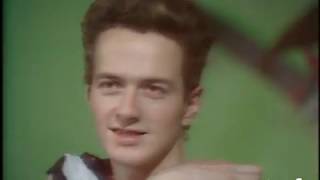
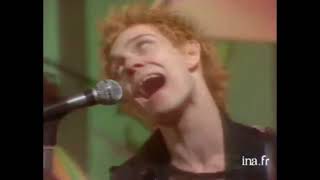
Novembre 1977. The Clash sur le plateau de Pop 2, Antenne 2. Trois présentateurs. Impeccables. Les santiags bien brillantes.
November 1977. The Clash on the set of Pop 2, Antenne 2. Three hosts. Immaculate. Cowboy boots freshly polished.
Le décor : Halloween avant qu’on sache ce qu’est Halloween. Chauves-souris en carton-pâte, formes géométriques criardes, filets de pêche dans le fond — sans doute un hommage involontaire au magnifique pull à larges mailles de Paul Simonon.
The set: Halloween before France knew what Halloween was. Cardboard bats, garish geometric shapes, fishing nets in the background — possibly an accidental tribute to Paul Simonon’s magnificent wide-knit sweater.
Un jeune garçon en duplex de nulle part — remarquez le pull, la chemise et la coupe de cheveux — (étais-je ainsi ?) pose la grande question politique avec un sérieux admirable. Joe répond sans ciller : c’est juste du rock’n’roll. Trois mots. Le duplex reste sans voix.
A young boy on satellite from nowhere — note the sweater, the shirt, the haircut — (was I like that?) asks the big political question with admirable seriousness. Joe doesn’t flinch: it’s just rock’n’roll. Three words. The satellite link goes quiet.
Regardez les regards du groupe — ils ont l’air de se demander s’ils ont atterri sur la bonne planète. Syndicats obligent : une unique caméra, plan fixe, volume bridé. Ils se lancent quand même. Complete Control et 1977 amputés de la moitié de leur son — les guitares rythmiques sonnent comme des ukulélés. Ça tient encore. La deuxième prise ? London’s Burning. Non diffusée. Trop percutant, sans doute.
Union rules: one single camera, fixed shot, volume throttled. French TV had its standards. The Clash work with it — they go for it anyway. Complete Control and 1977 with half the sound removed — rhythm guitars sounding like ukuleles. Still holds. The second take? London’s Burning. Never broadcast. Apparently that was a step too far.
La télé française dans les années 70… On faisait avec.
Pogo. Europe 1, 1978. Tard la nuit, aux alentours de minuit. Des jingles déglingués, un ton frisant l’hystérie, et une playlist importée en temps réel de Londres, New York et Berlin : Sex Pistols, The Clash, The Damned, Talking Heads, Starshooter, Téléphone. Des 45 tours ramenés de partout, enchaînés sans concession. Laissons Alain Maneval nous raconter tout ça.
French TV in the 70s… You worked with what you had.
Pogo, Europe 1, early 1978. Midnight. One hour on air, a tone bordering on hysteria, busted jingles, disco singles smashed live on mic. Then straight into the Pistols, the Clash, the Damned, Siouxsie — imported from London, New York, Berlin. Plus Starshooter, Téléphone, everything French rock had to say. Let Alain Maneval tell you the rest.
Sex Pistols, God Save the Queen — la chanson qui a fait dérailler le Jubilee
Tracks / On Stage / Sex Pistols — God Save the Queen
The song that hijacked the Jubilee. The Queen got her parade. The Pistols got the song that outlasted it.
2026/05/11
Le titre vole l'hymne. Trois mots, et tout est dit : on garde la formule, on retire la déférence. Ce qui reste, c'est l'ironie pure.
"God save the queen / She ain't no human being."
En deux lignes, Lydon désacralise la monarchie. Pas une reine — une fiction utile. Une marque déposée que les sujets payent pour entretenir.
"There is no future / In England's dreaming."
L'Angleterre s'endort dans sa nostalgie pendant que ses jeunes pointent au chômage. Le Jubilé célèbre 25 ans d'un règne — Lydon répond : 25 ans pour quoi ?
"No future, no future, no future for you."
Pas un slogan. Un diagnostic. Trois minutes pour dire ce que personne n'osait — et toute une génération qui se reconnaît dedans.
07/06/1977. Tamise. Pendant que Londres pavoise pour le Jubilé d'argent, McLaren loue un bateau, embarque les Pistols et fait jouer le morceau en boucle devant le Parlement. La police aborde, embarque tout le monde. Un single, une scène de crime, une légende.
Sex Pistols — Croisière sur la Tamise · 7 juin 1977
7 June 1977. Thames. While London is dressed up for the Silver Jubilee, McLaren hires a boat, puts the Pistols on board, and blasts the song on a loop right in front of Parliament. Police boards. Everyone gets arrested. A single, a crime scene, a legend.
The title hijacks the anthem. Three words, and everything is said: keep the formula, drop the reverence. What's left is pure irony.
"God save the queen / She ain't no human being."
In two lines, Lydon strips the monarchy bare. Not a queen — a useful fiction. A trademark her subjects pay to maintain.
"There is no future / In England's dreaming."
England dozes off in its own nostalgia while its kids queue at the dole office. The Jubilee celebrates 25 years of a reign — Lydon answers: 25 years for what?
"No future, no future, no future for you."
Not a slogan. A diagnosis. Three minutes to say what nobody dared — and a whole generation recognizing itself in it.

Le single est banni de la BBC, des chaînes commerciales, des distributeurs. Il monte quand même au numéro 2 du UK Chart. Officiellement. Officieusement, beaucoup pensent qu'il était premier — et qu'on l'a fait redescendre pour ne pas gâcher la fête.
The single is banned by the BBC, commercial stations and distributors. It still climbs to number 2 on the UK Chart. Officially. Unofficially, many believe it was number one — and that it was pushed down to avoid spoiling the party.
Tracks / On Stage / Stiff Little Fingers — Alternative Ulster
Caen, fin des années 70. Le gros Sweet de Sweet Harmony revient d'une de ses virées en Grande-Bretagne, les bras chargés de singles comme à chaque voyage. Cette fois-là, il pose sur la platine un disque irlandais. Et ça tourne en boucle. Longtemps.
Stiff Little Fingers : quatre types de Belfast qui chantent leur ville sous tension. Pas de provocation de façade, pas de bondage gear londonien — du vécu, brut. La voix de Jake Burns, rauque et tendue comme un fil sous tension. Les riffs, secs, sans concession. Et la pochette d'Alternative Ulster : un enfant qui crie sur un muret, un soldat accroupi en dessous avec son fusil. Pas de mise en scène. Belfast, scène ordinaire.

7" single — Oct. 1978
Rigid Digits / Rough Trade
RT 004
Caen, late 70s. Sweet — the big guy from Sweet Harmony — comes back from one of his usual UK runs, arms full of singles like every trip. This time, he drops an Irish record on the turntable. And it spins. For a long, long time.
Stiff Little Fingers: four guys from Belfast singing their city under pressure. No fake provocation, no London bondage gear — just lived experience, raw. Jake Burns' voice, hoarse and taut as a wire. The riffs, dry, uncompromising. And the Alternative Ulster sleeve: a child screaming on a wall, a soldier crouched below with his rifle. No staging. Belfast, ordinary scene.
Le groupe avait commencé en cover band hard rock — Deep Purple, le nom de scène Highway Star. Le punk débarque en 1976, les solos passent au placard. Ils empruntent leur nouveau nom à une chanson des Vibrators et écrivent sur ce qu'ils connaissent : les Troubles, les checkpoints, la peur ordinaire.
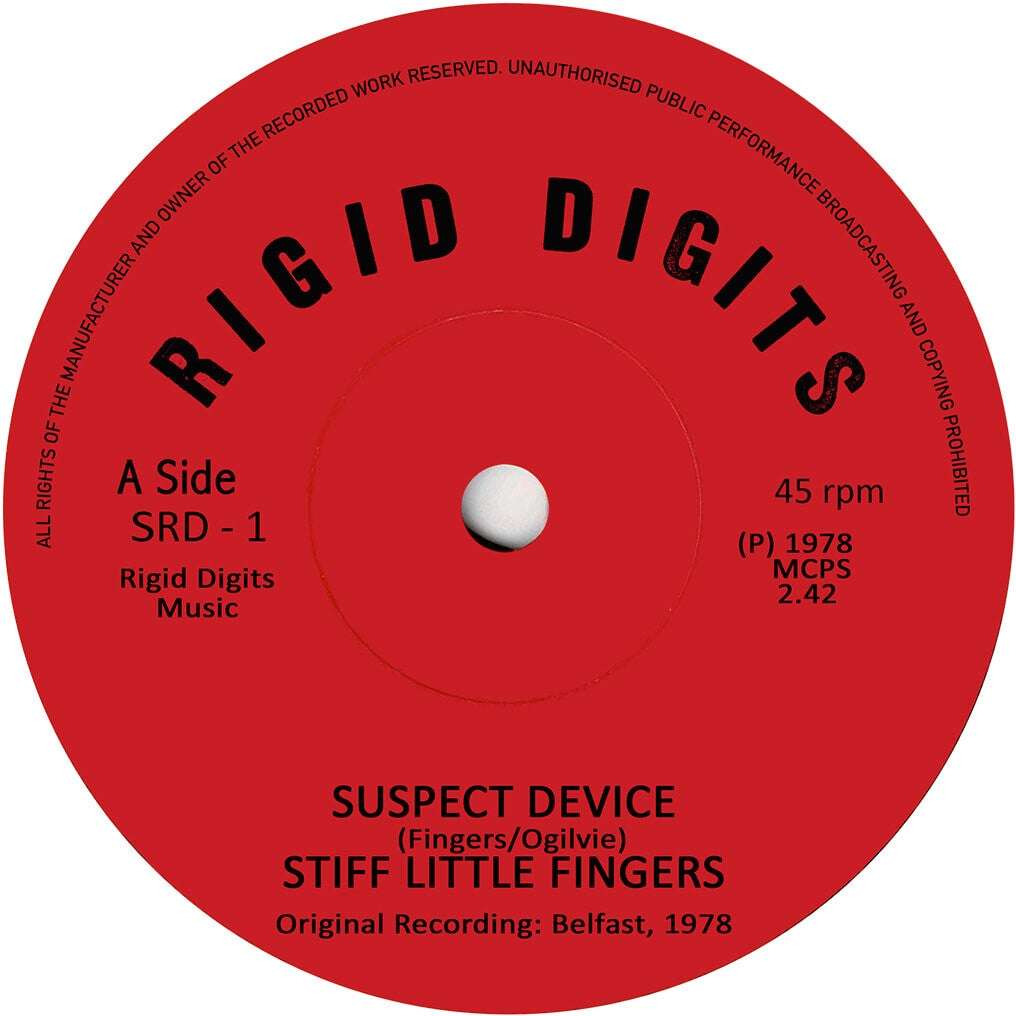
En novembre 1977, Suspect Device sort sur leur propre label Rigid Digits. Envoi à John Peel, qui le passe tous les soirs sur BBC Radio 1. L'histoire commence comme ça. En 1979, Inflammable Material sort chez Rough Trade : premier album indépendant à entrer dans les charts britanniques, n°14, 100 000 exemplaires.
The band had started as a hard-rock cover act — Deep Purple covers, stage name Highway Star. Punk hits in 1976, the solos get shelved. They borrow their new name from a Vibrators song and start writing about what they know: the Troubles, the checkpoints, ordinary fear.
November 1977: Suspect Device drops on their own label Rigid Digits. A copy goes to John Peel, who plays it every night on BBC Radio 1. That's where it begins. In 1979, Inflammable Material comes out on Rough Trade — the first independent album to enter the UK charts, no. 14, 100,000 copies sold.
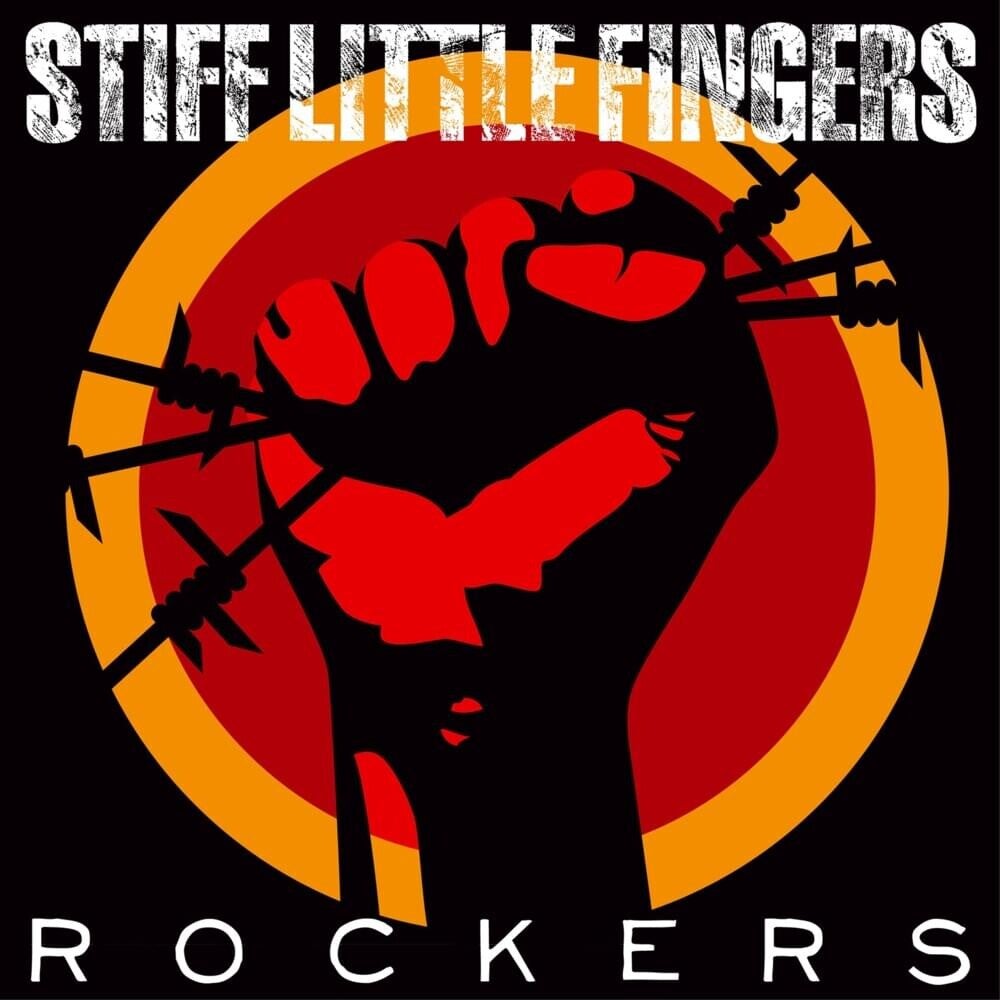
On retrouve ce même mood — la violence ordinaire portée sans emphase — dans leur reprise de Johnny Was de Bob Marley. Chez Marley, une ballade sombre sur la mort d'un jeune homme dans les ghettos de Kingston. Chez SLF, ça devient plus tendu, presque déchirant. Excellent en single, solide sur l'album studio — et encore meilleur sur scène, où le titre s'étire et monte en tension.
Le groupe se sépare en 1983, se reforme en 1987, et tourne encore aujourd'hui. Jake Burns — seul membre présent dans toutes les formations — chante toujours comme si le mur de son immeuble venait de prendre une balle.
Studio album — 1999
Spitfire Records
incl. Johnny Was (live)
You hear the same mood — everyday violence carried without grandstanding — in their cover of Johnny Was by Bob Marley. With Marley, a dark ballad about a young man shot dead in the Kingston ghettos. With SLF, it gets tighter, almost wrenching. Excellent as a single, solid on the studio album — and even better live, where the song stretches out and builds.
The band split in 1983, reformed in 1987, and they're still touring today. Jake Burns — the only member to have played in every line-up — still sings like the wall of his building just took a bullet.
Tracks / On Stage / The Clash — Music Machine, London 1978
The Clash — Live at the Music Machine, Camden · 27 juillet 1978
Summer 1978, the Out on Parole tour. The Clash pull into the Music Machine — a low-ceilinged Camden ballroom (today's KOKO) — and turn it into a furnace. No barriers, no arena gloss: just four of them a couple of metres from a crowd that gives back everything it gets. This is the Clash as a club band, at the exact moment before the world got bigger.
Été 1978, la tournée Out on Parole. Les Clash débarquent au Music Machine — une salle basse de plafond à Camden (l'actuel KOKO) — et la transforment en fournaise. Pas de barrière, pas de vernis de stade : quatre types à deux mètres d'un public qui rend tout ce qu'il reçoit. C'est le Clash groupe de club, juste avant que le monde ne devienne plus grand.
The set is a hinge between two records. Complete Control and What's My Name detonate from the first album, while Safe European Home — still months from release on Give 'Em Enough Rope — gets road-tested raw. Strummer spits, Jones' guitar slashes, Simonon prowls, Topper Headon drives it all. Footage like this is why the live Clash became legend: not polish, but conviction at full tilt.
Le set fait charnière entre deux disques. Complete Control et What's My Name explosent, tirés du premier album, tandis que Safe European Home — encore à des mois de sa sortie sur Give 'Em Enough Rope — est essayé à cru. Strummer crache, la guitare de Jones lacère, Simonon rôde, Topper Headon propulse le tout. C'est pour des images comme celles-ci que le Clash sur scène est devenu une légende : pas du léché, de la conviction à plein régime.
Tracks / On Stage / The Clash Live
The Clash didn't just make records — they detonated on stage. From a sweatbox in Camden in '78 to Shea Stadium in '82, this was the band that turned every gig into a riot with a backbeat. Four windows onto the greatest live act punk ever produced — in motion.
Les Clash ne faisaient pas que des disques — ils explosaient sur scène. D'un club-étuve de Camden en 78 au Shea Stadium en 82, c'est le groupe qui transformait chaque concert en émeute sur un backbeat. Quatre fenêtres sur le plus grand live que le punk ait produit — en images.
Accueil/On Stage/The Saints Live
Tracks/On Stage/The Saints Live
No venue would have them, so they opened their own — Brisbane, 1976.
Before London, before the Pistols, there was a front room in Brisbane with an amp in it. No publican would book The Saints, so Chris Bailey and Ivor Hay turned the house they rented at 4 Petrie Terrace into a venue and called it Club 76. No licence, no stage, no poster. The police pulled the plug more than once.
Everything the band did afterwards came out of that room: the speed, the refusal, the flat hair they wouldn't spike for EMI.
Avant Londres, avant les Pistols, il y a un salon à Brisbane avec un ampli dedans. Aucun patron de pub ne veut des Saints, alors Chris Bailey et Ivor Hay transforment la maison qu'ils louent au 4 Petrie Terrace en salle de concert et l'appellent le Club 76. Pas de licence, pas de scène, pas d'affiche. La police a coupé le courant plus d'une fois.
Tout ce que le groupe fera ensuite sort de cette pièce : la vitesse, le refus, et ces cheveux plats qu'ils n'ont jamais accepté de dresser pour EMI.
Stranded — le punk de Brisbane sous Joh Bjelke-Petersen
September 1976: "(I'm) Stranded", pressed on their own label and posted to English radio stations. The first punk single outside the States — before the Clash, before the Damned. EMI London wired Sydney: sign them.
May 1977, they land in England, and the second fight starts. The label wants safety pins and spiked hair. They say no. Plain shirts, nothing to do with the King's Road, and on stage no concessions either: the Roundhouse in June, then London on 26 November — forty-five minutes still available on record, fourteen songs and not a slack one.
"This Perfect Day" reaches No. 34. EMI fails to press enough copies. Geldof said three bands changed rock in the seventies: the Pistols, the Ramones and the Saints. Two of them got the cover of the NME.
Septembre 1976 : « (I'm) Stranded », pressé sur leur propre label et expédié par la poste aux radios anglaises. Premier 45 tours punk hors des États-Unis — avant les Clash, avant les Damned. EMI Londres télégraphie à Sydney : signez-les.
Mai 1977, ils débarquent en Angleterre, et la deuxième bagarre commence. La maison de disques veut des épingles à nourrice et des cheveux dressés. Ils refusent. Chemises quelconques, rien à voir avec le King's Road, et sur scène aucune concession non plus : le Roundhouse en juin, puis Londres le 26 novembre — quarante-cinq minutes qui existent encore en disque, quatorze titres et pas un temps mort.
« This Perfect Day » monte à la 34e place. EMI ne presse pas assez de copies. Geldof a dit que trois groupes avaient changé le rock des années 70 : les Pistols, les Ramones et les Saints. Deux ont eu la couverture du NME.
À écouter — The Saints, Live In London, 26th November 1977 · 14 titres, 45 min
À lire — Andrew Stafford, Pig City: From The Saints to Savage Garden
Repère — 4 Petrie Terrace, Brisbane : une fresque rend hommage au groupe depuis 2017, à deux pas de la maison.